
Scrim UI
The UI layer your AI product is missing.
Free in-browser tools and copy-ready components for AI interfaces — prompt inputs, agent states, tool calls, citations, reasoning, voice and memory.
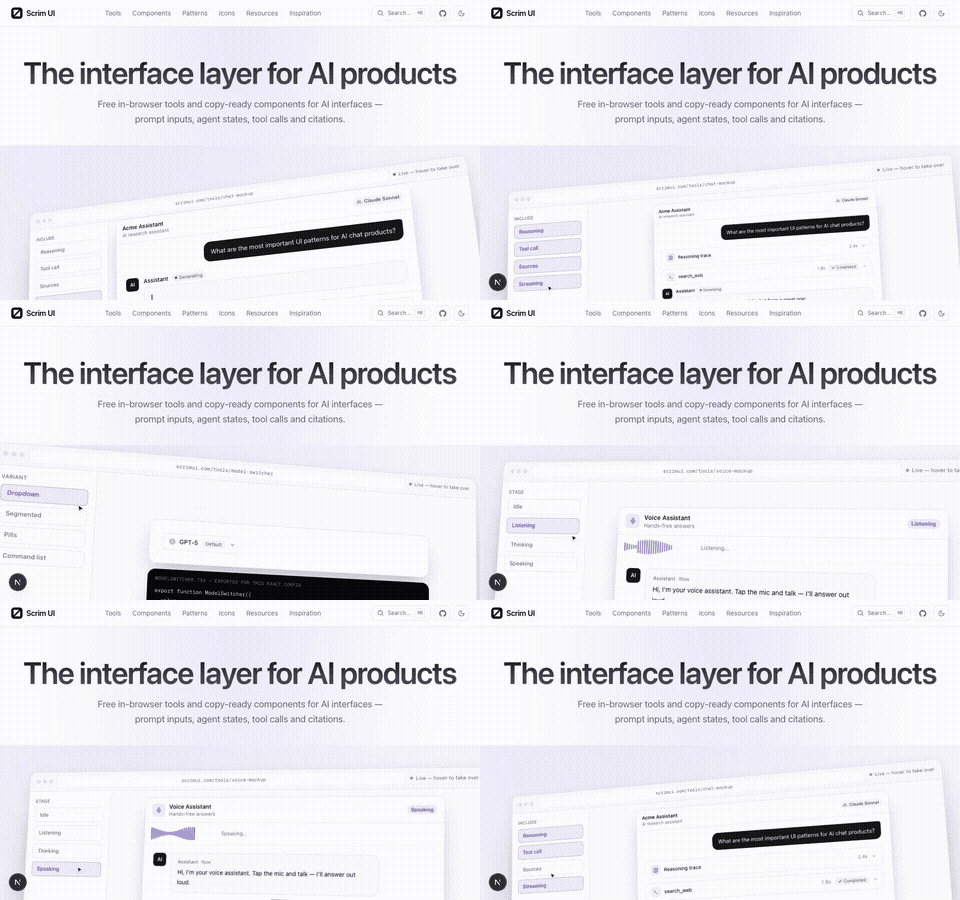
A scrim is the gauze that looks opaque until you light what is behind it. AI products invented a whole vocabulary of interface in three years — streaming, tool calls, reasoning traces, approval gates, context windows, memory — and nobody wrote it down. This is the attempt: what each concept is called, what icon it gets, what it looks like, what code it is, and when to use it.
What it looks like
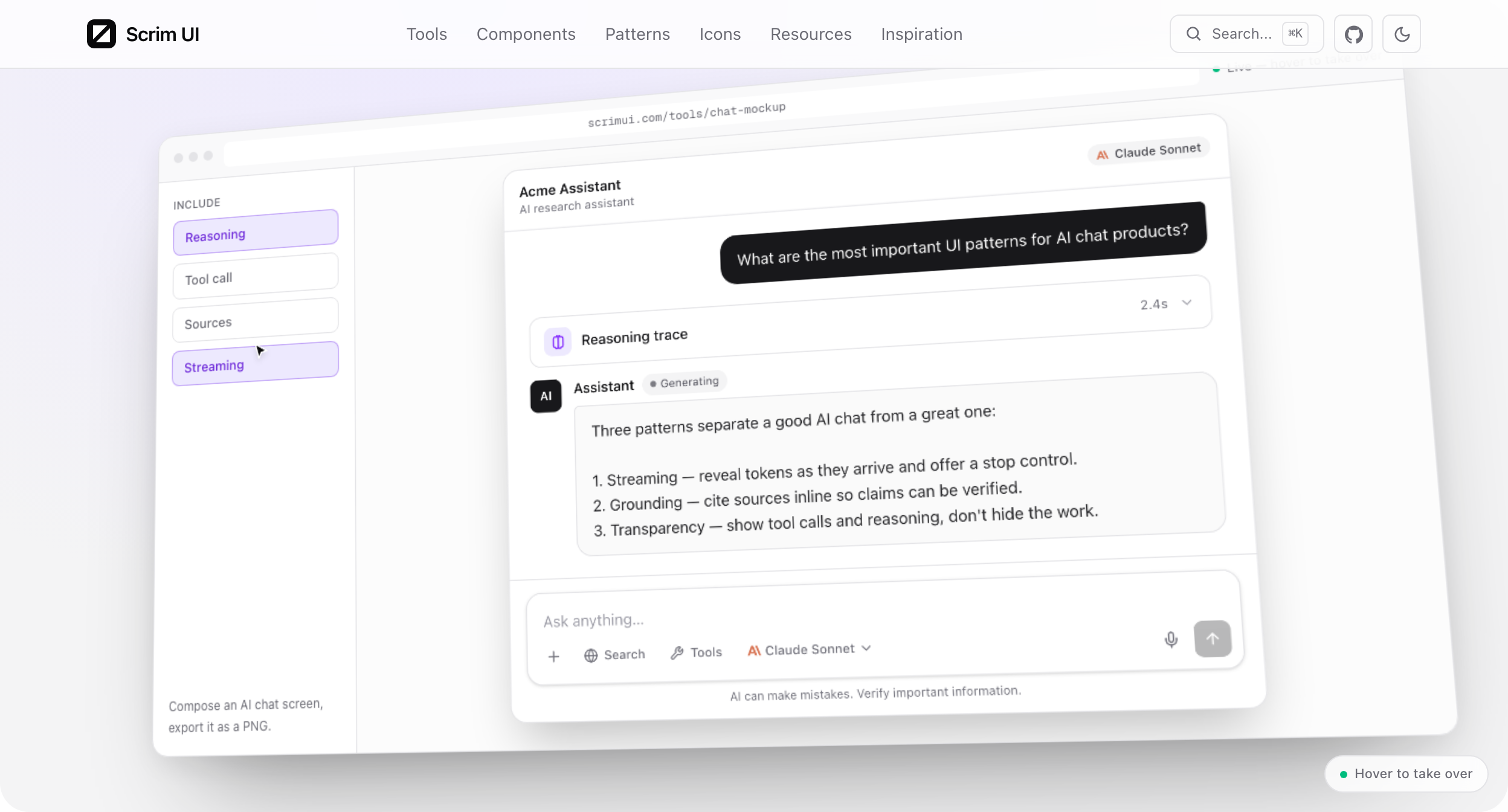
The homepage demo is live DOM — the same components the tool pages ship — driven by a scripted cursor. Hover anywhere to take over.
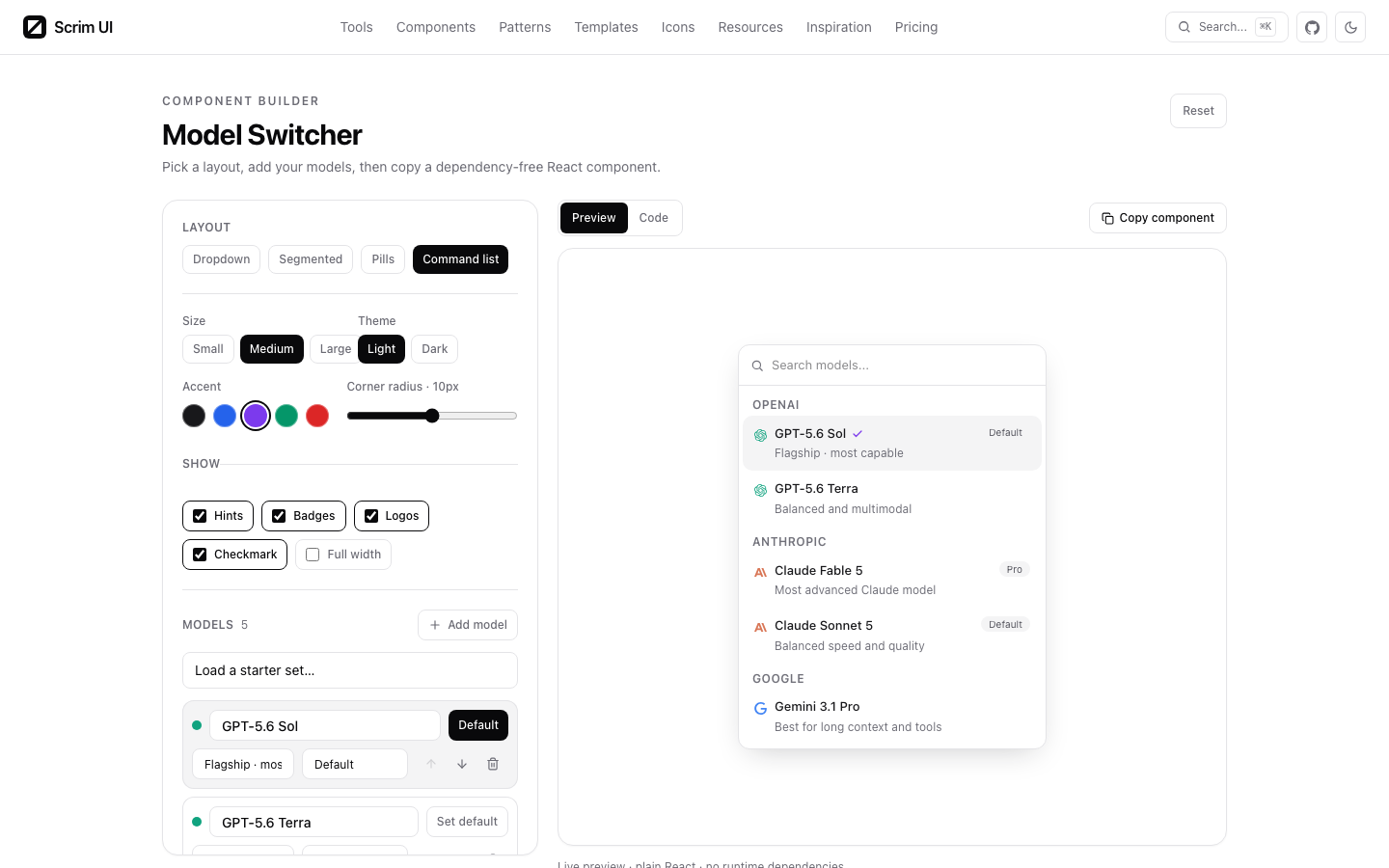
The groups models by provider and regenerates the exported component as you change the props:
Install a component
All 29 components are in the registry; the index is at .
Or skip the CLI entirely — every free component page has the full MIT source and a copy button. Pro implementations are built in a separate private repository and delivered only after an entitlement check.
What is here
Run it locally
Next.js App Router, Tailwind v4, TypeScript. No database, no API keys, no environment variables required — every page is statically generated.
Set NEXT_PUBLIC_SITE_URL to override the origin used by the sitemap,
canonical URLs and the registry.
Layout
Pro names, descriptions and file manifests live in src/lib/pro-catalog.json.
The paid implementations do not live under this Git root. See
LICENSING.md [blocked] and run npm run check:public before publishing.
Licence
The software source present in this public repository is MIT [blocked]. Copy a free component and you owe nothing — no attribution in your product and no link back.
Pro source is distributed separately under the commercial licence [blocked]. Editorial content, the name and mark, and third-party screenshots are also outside MIT; LICENSING.md [blocked] defines the exact boundary.
Icons are from under the ISC licence. The icons are theirs; the concept-to-icon mapping is ours.